What is powder coating?
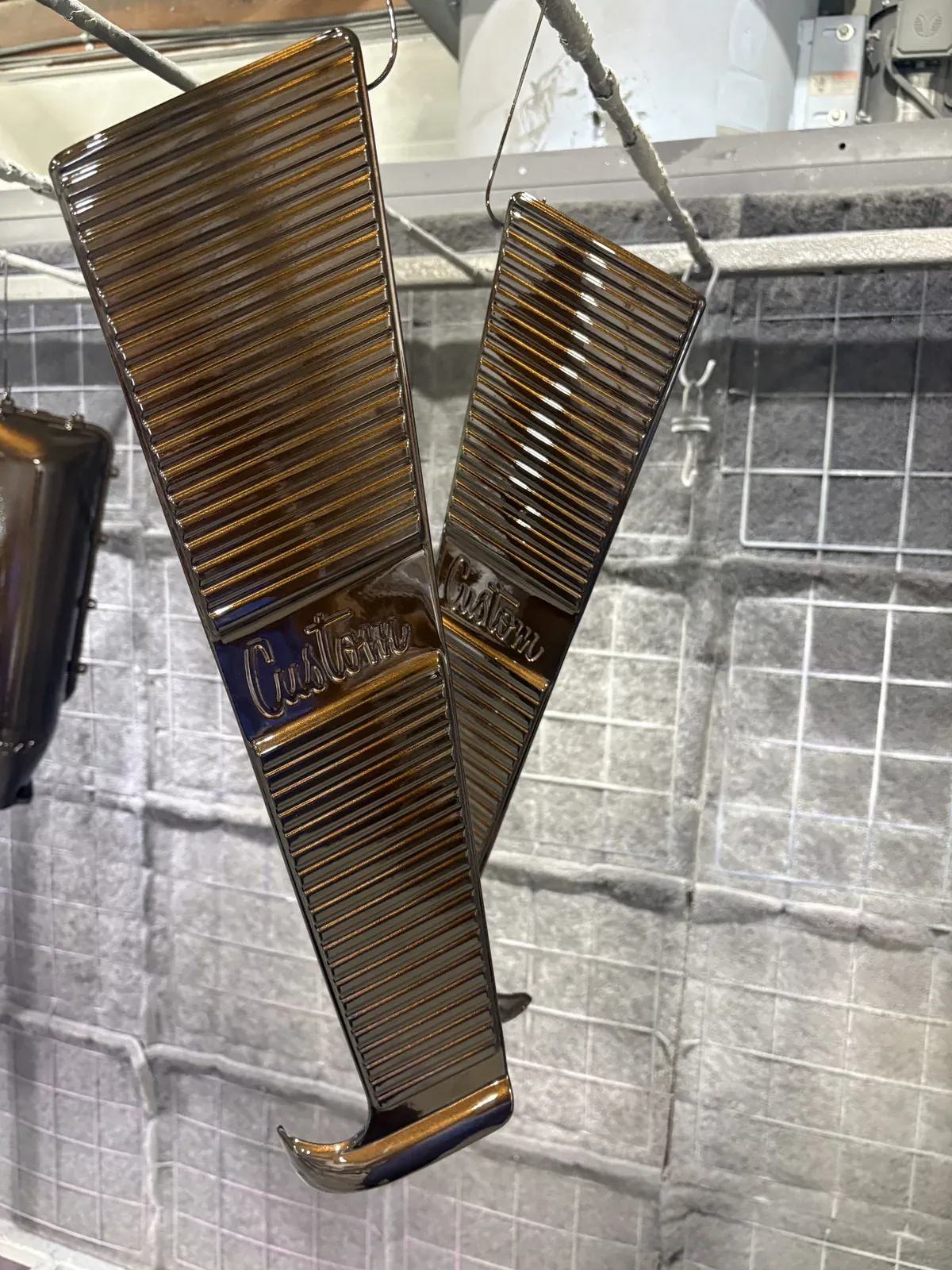
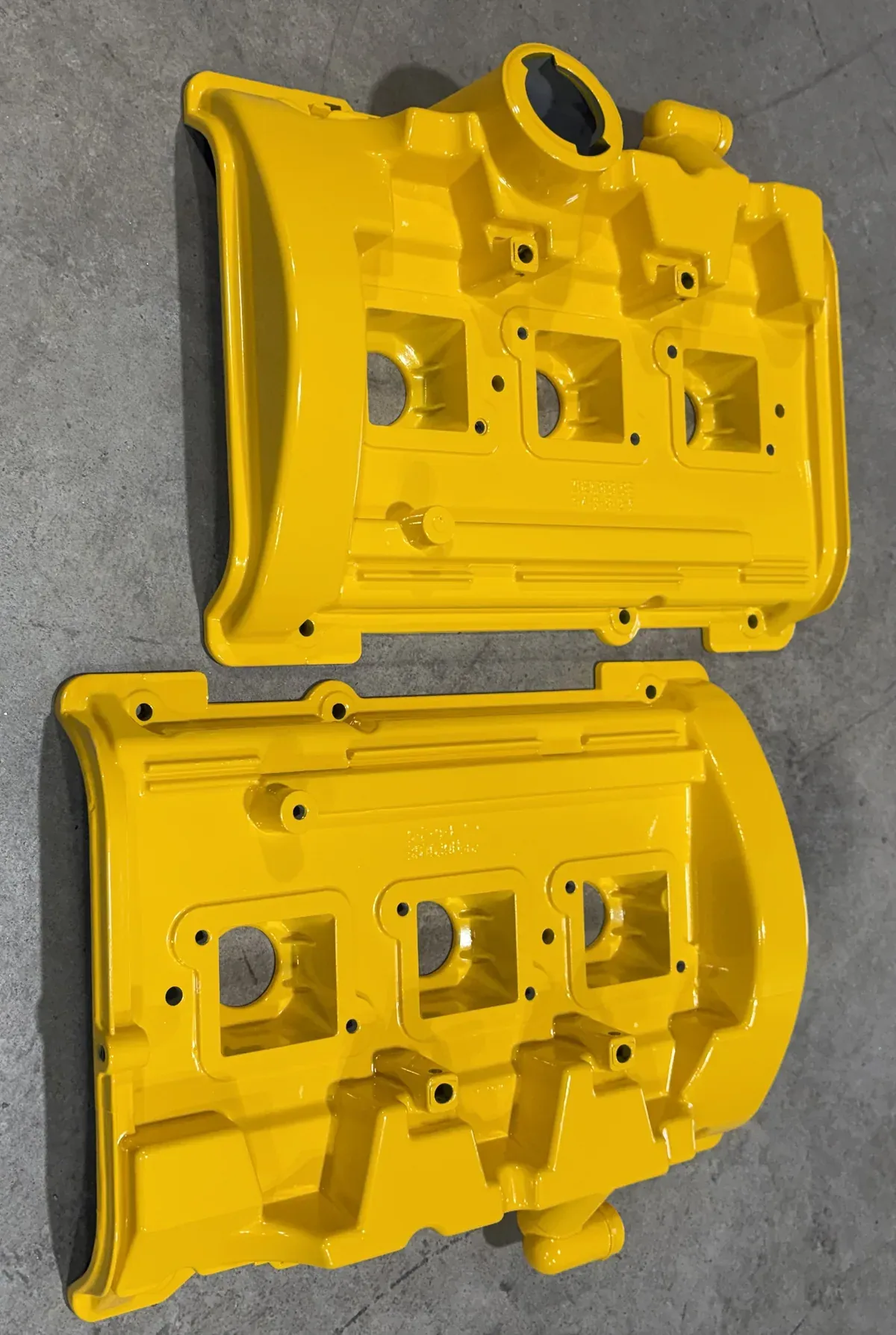
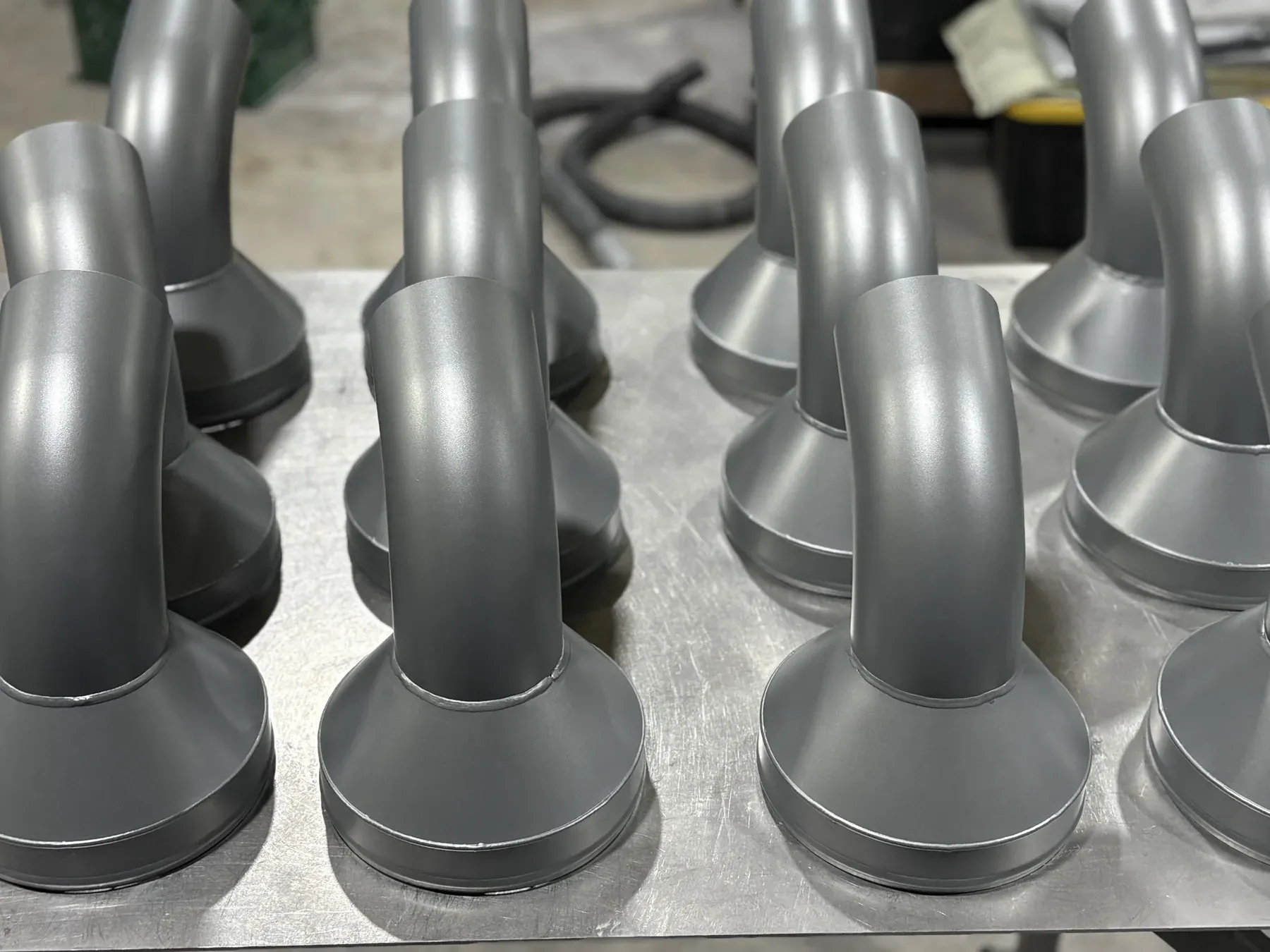
Powder coating is a dry finishing process. Pigment in powder form is given an electrostatic charge, sprayed onto grounded metal so it clings evenly, then cured in an oven at around 400°F, where it melts, flows out, and bonds into a hard uniform shell. There are no solvents involved and no runs or drips, which is why it holds an even film on edges and corners that liquid paint tends to sag off.
How much does powder coating cost?
Cost depends on part size, how much stripping and blasting the surface needs, the powder you pick, and quantity. A small bracket is priced very differently from a set of wheels or a production batch. Send a few pictures and the finish you want and you will get a straight number for your job, not a range.
How long does powder coating last?
With proper prep, powder coat commonly holds up for 15 to 20 years outdoors, far longer than rattle-can or brush paint. Prep is the whole game: we blast to bare metal and clean before any powder goes on, which is why our finishes don't peel off in sheets the way coatings over old paint do.
Is powder coating better than regular paint?
For metal parts, yes in almost every case. Powder cures into a bonded shell that resists chips, scratches, fuel, and UV fade better than liquid paint, and it goes on in a uniform coat with no runs or drips. It can cost more up front, because the blasting and prep are real labor, but it lasts years longer, so you aren't refinishing the same part every few seasons. Paint still wins for anything that can't go through a cure oven.
What are the disadvantages of powder coating?
It isn't right for everything, and it's worth knowing that up front. The part has to fit in the oven and survive around 400°F, which rules out most plastics, wood, and anything with rubber seals or electronics still attached. Touch-ups are harder than with liquid paint: you generally recoat the whole piece instead of blending a spot. And because prep is most of the labor, a badly rusted part, or one with a lot of threads to mask, costs more than the coating alone would suggest. For bare metal that fits the oven, nothing else we do lasts as long.
Does powder coating scratch off easily?
No. Cured powder is a bonded shell rather than a film sitting on top, so it shrugs off chips and scratches far better than paint does. It isn't indestructible. A curb strike or a dropped wrench can still gouge it. But brake dust, road salt, weather, and normal handling won't wear through it, and prep is what decides that: powder sprayed over old paint or flash rust will fail no matter how good the powder is.
What can be powder coated?
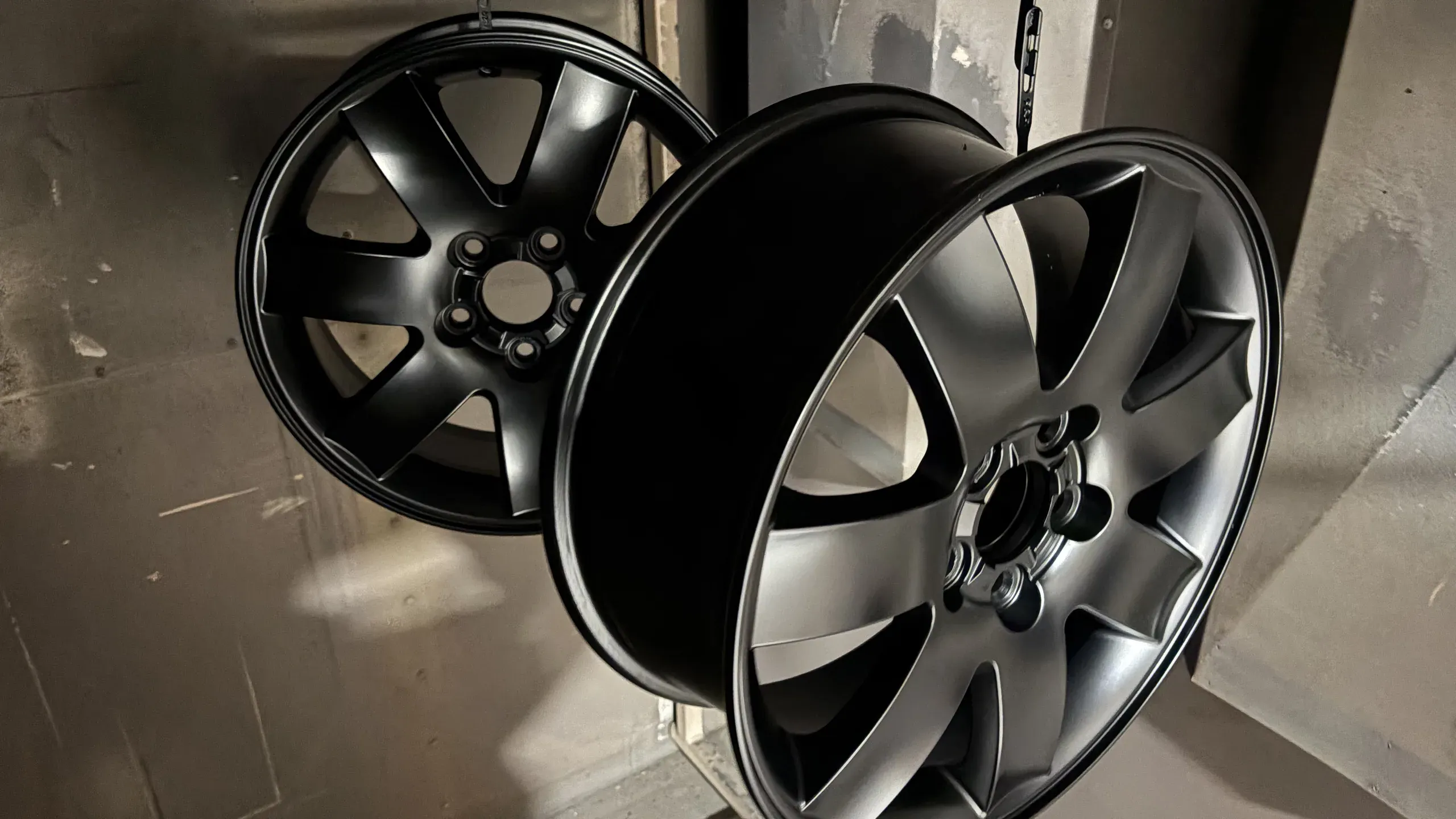
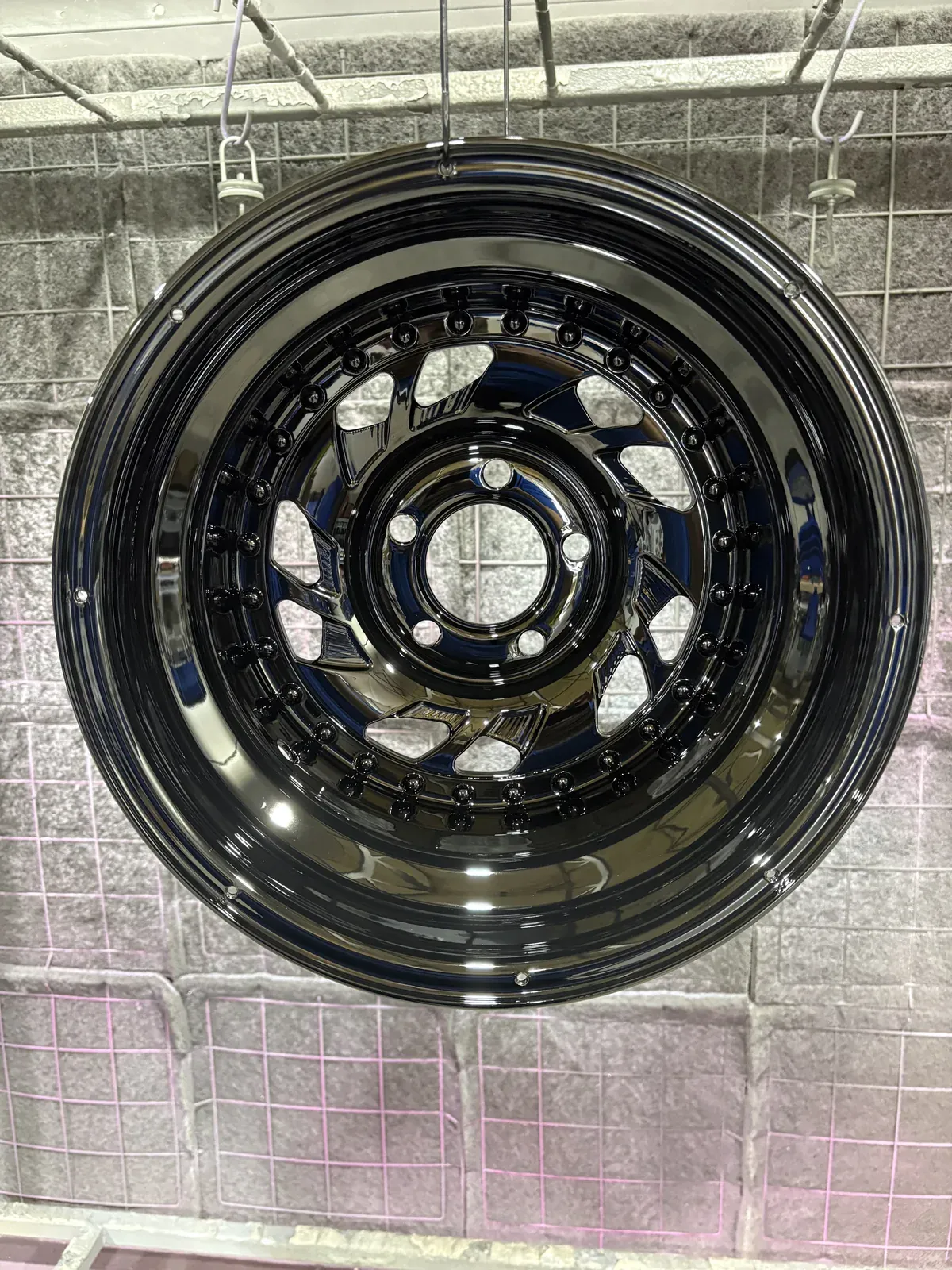
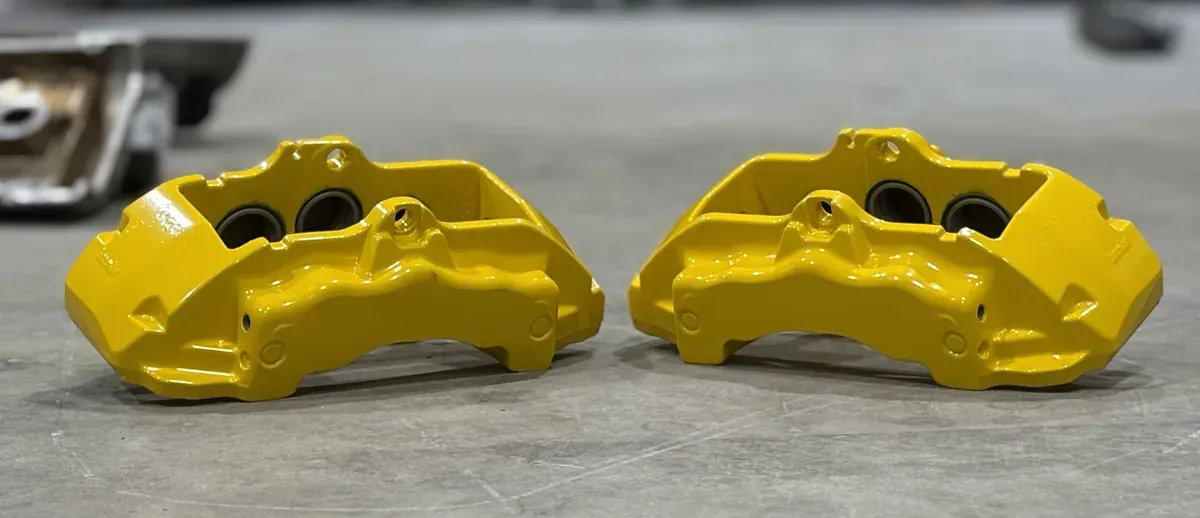
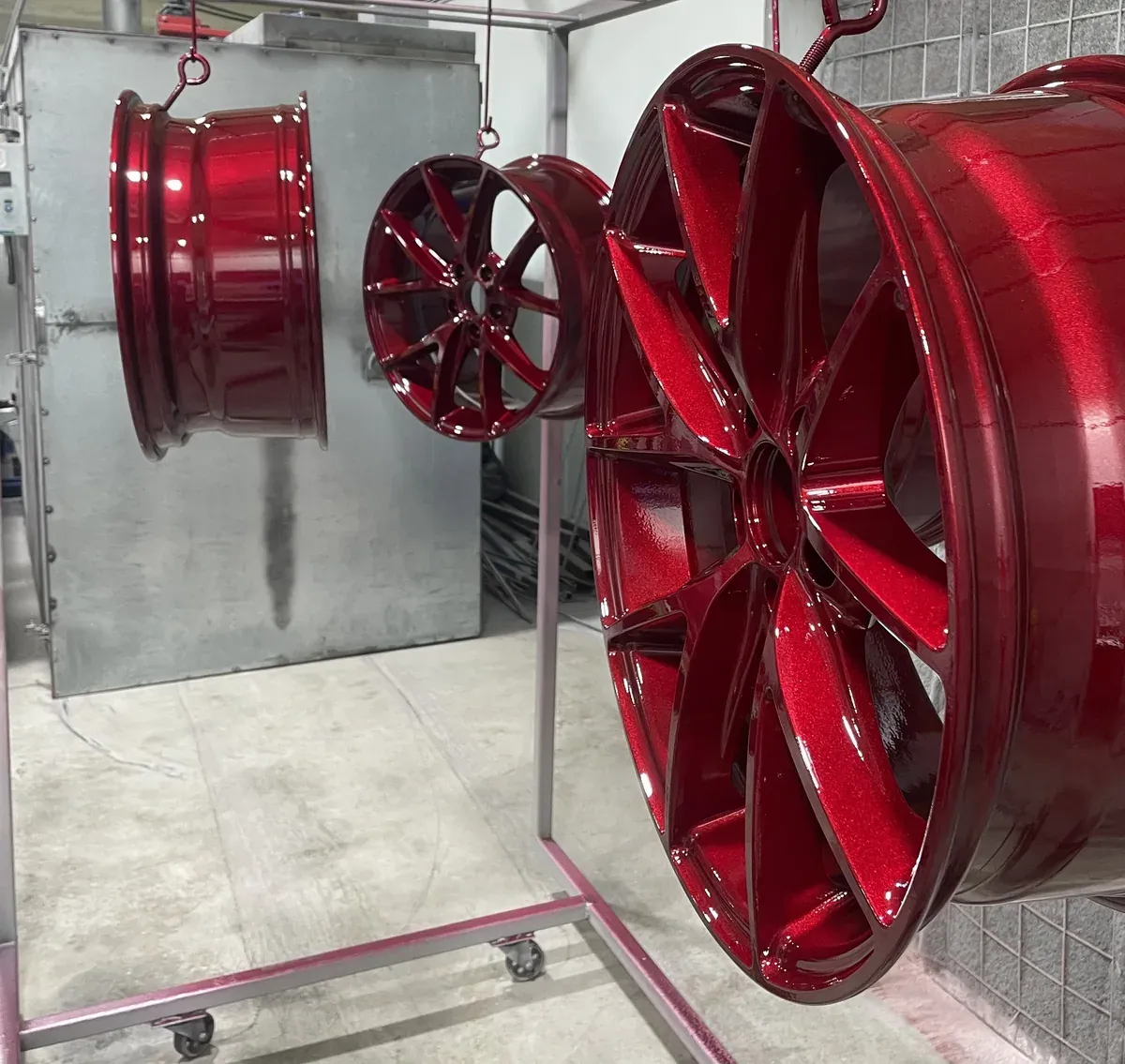
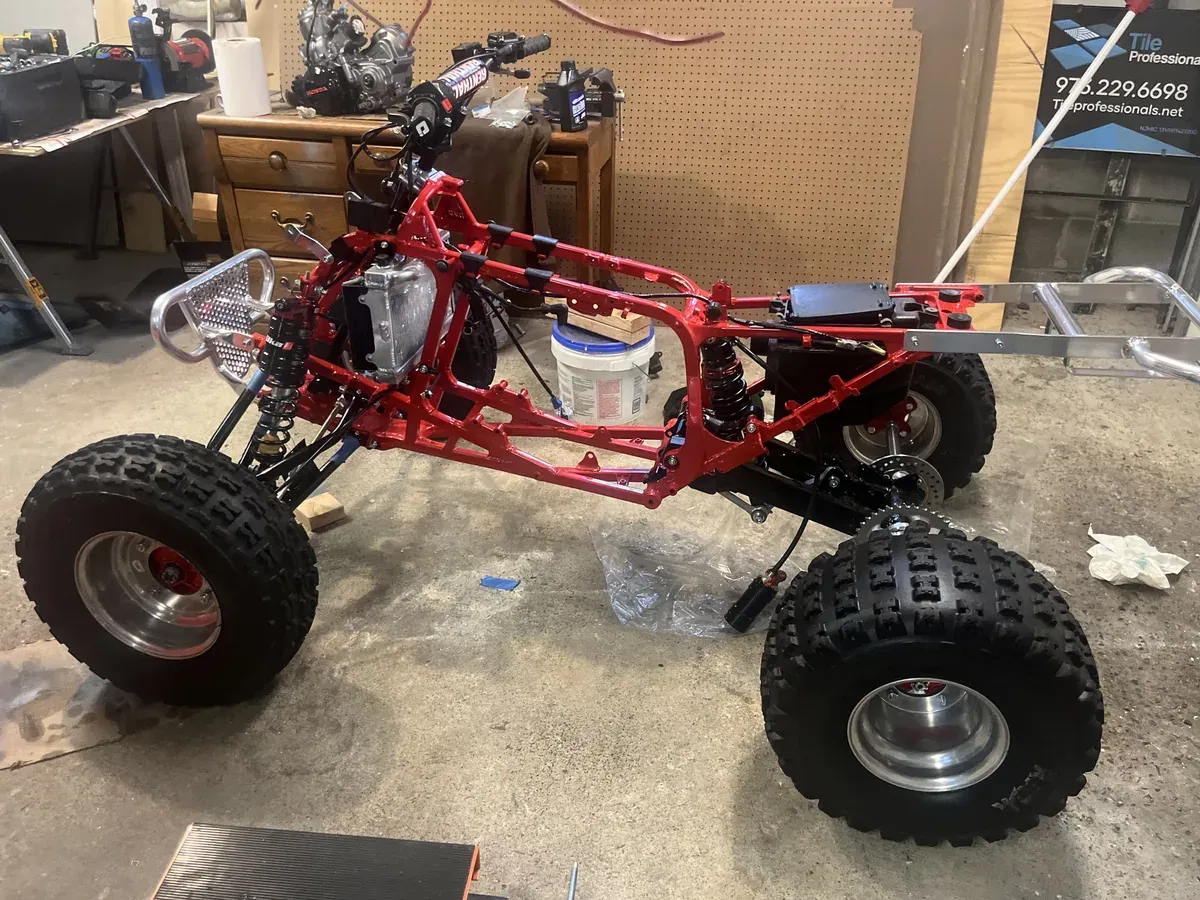
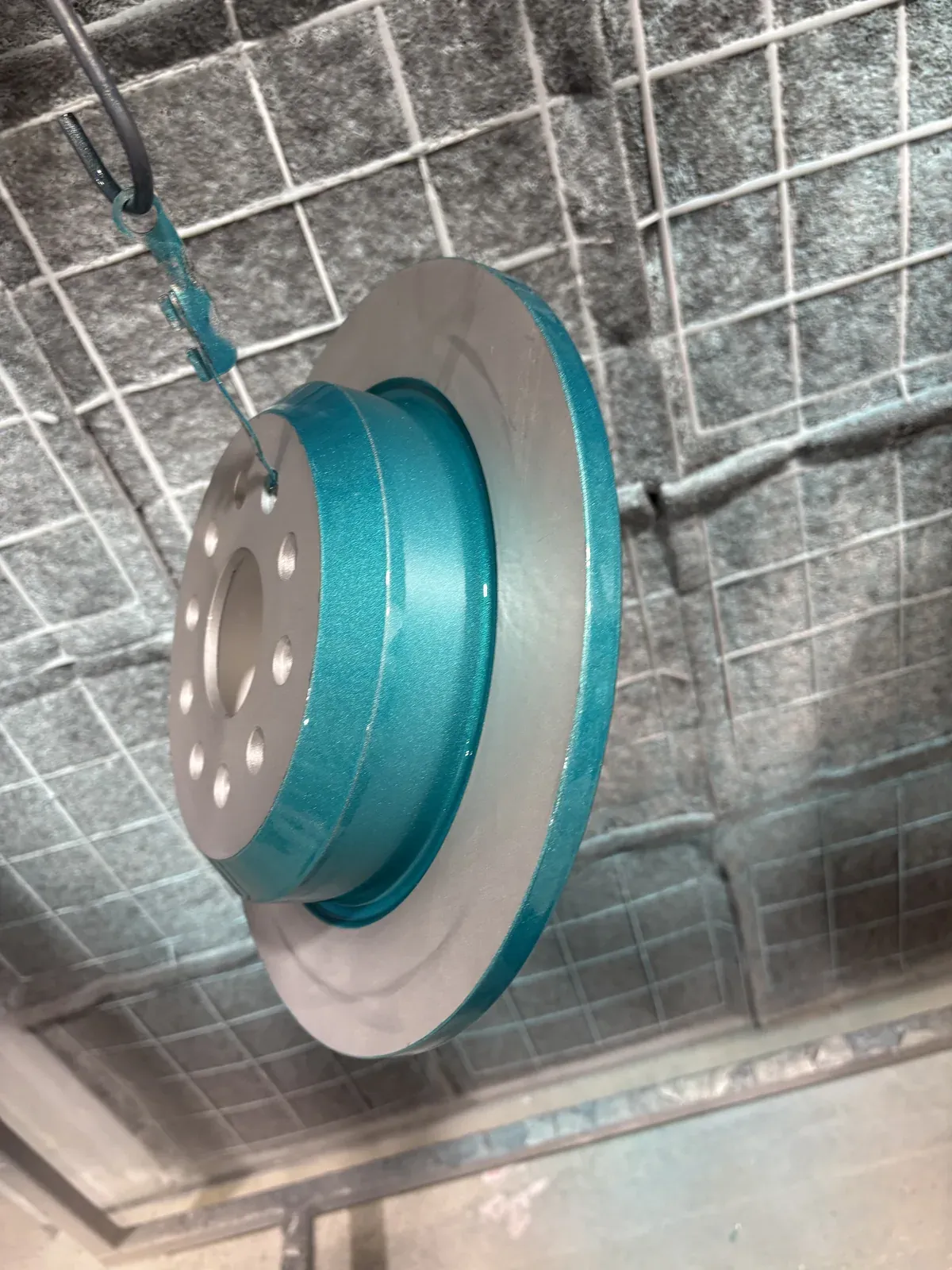
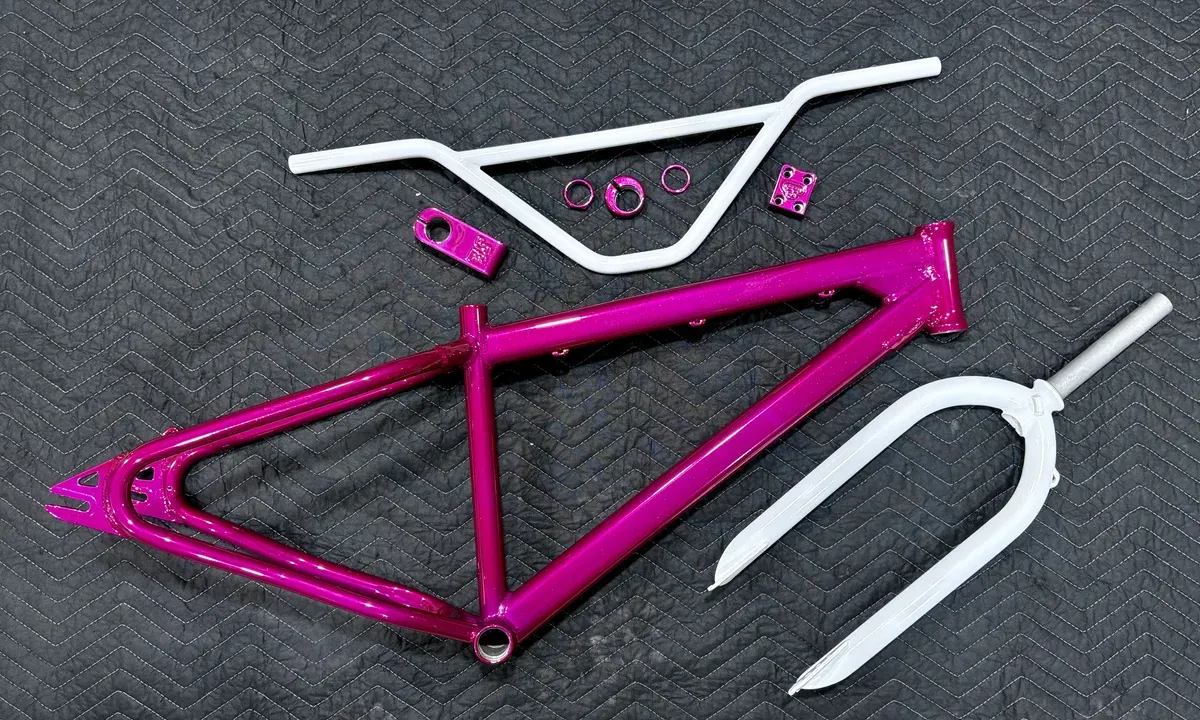
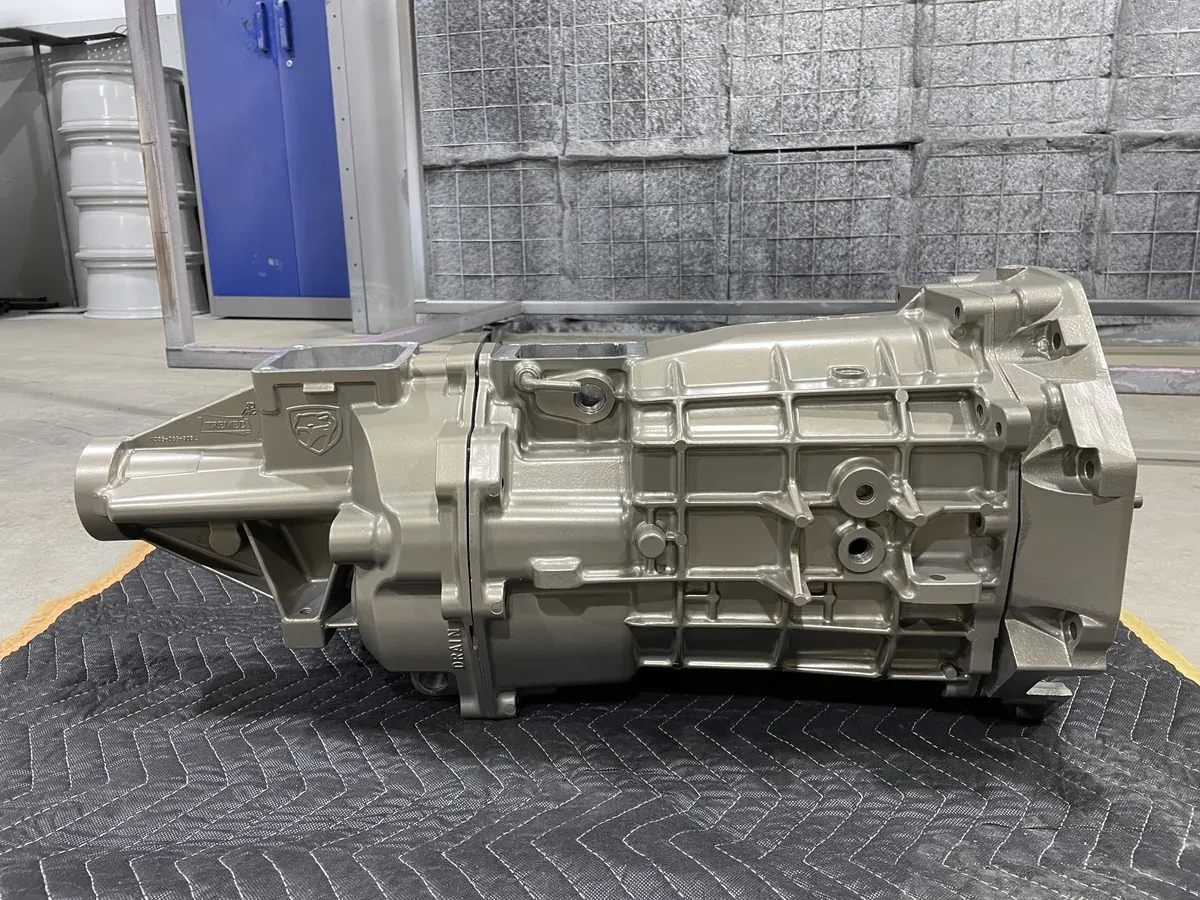
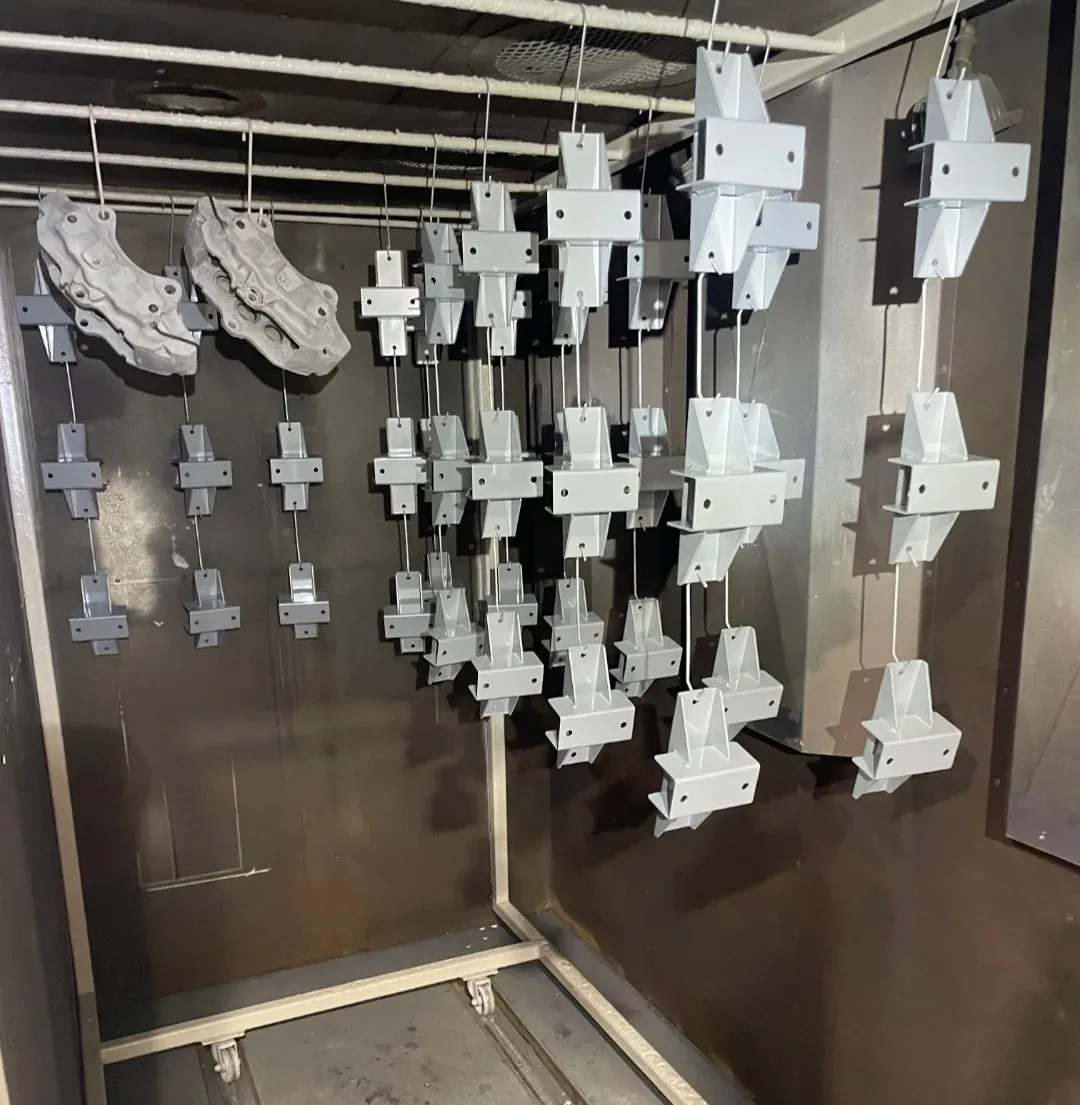
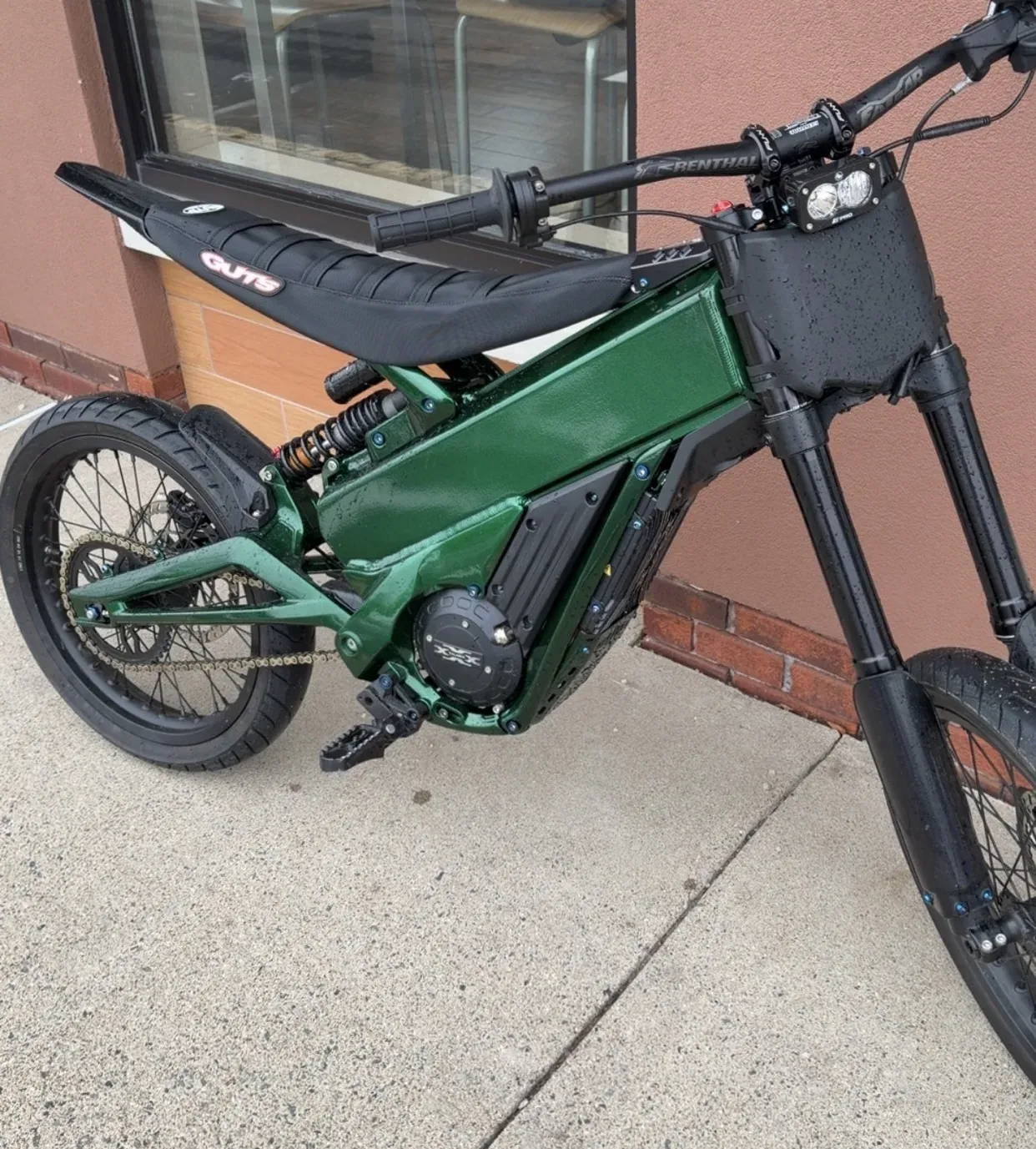
Almost any metal that fits the oven: wheels, brake calipers, motorcycle and bicycle frames, railings, gates, patio furniture, brackets, machine parts, and industrial hardware. Steel, aluminum, and stainless all coat well. If you're not sure about a part, send a photo and we'll tell you honestly.
Can you do powder coating at home?
Yes, with a hobby gun and a dedicated oven, and plenty of people do small parts that way. Two things trip up home setups. Prep is the first: without media blasting, powder goes on over contamination and fails early. Cure is the second: a kitchen oven won't hold an even 400°F, so the finish comes out soft or blotchy. Parts that need to look right or live outdoors are usually worth bringing to a shop.
What is an alternative to powder coating?
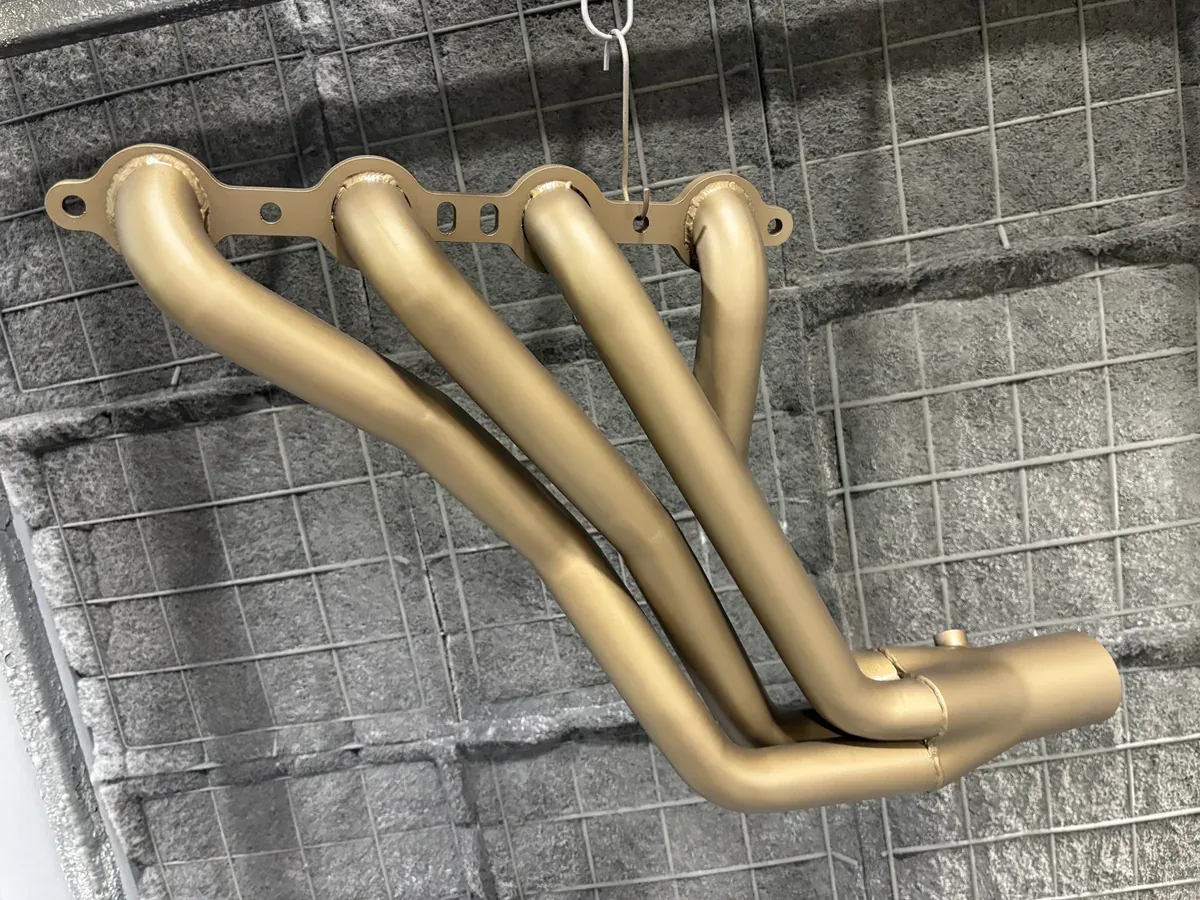
Liquid paint is the usual alternative, and it's the right call for anything that can't take oven heat: plastics, wood, assembled equipment, or a part too big to fit. For exhaust components and anything that runs hot, high-temp ceramic coating replaces powder entirely. Plating and anodizing solve a different problem again, mostly corrosion resistance on specific alloys rather than color.
Do you take small one-off jobs?
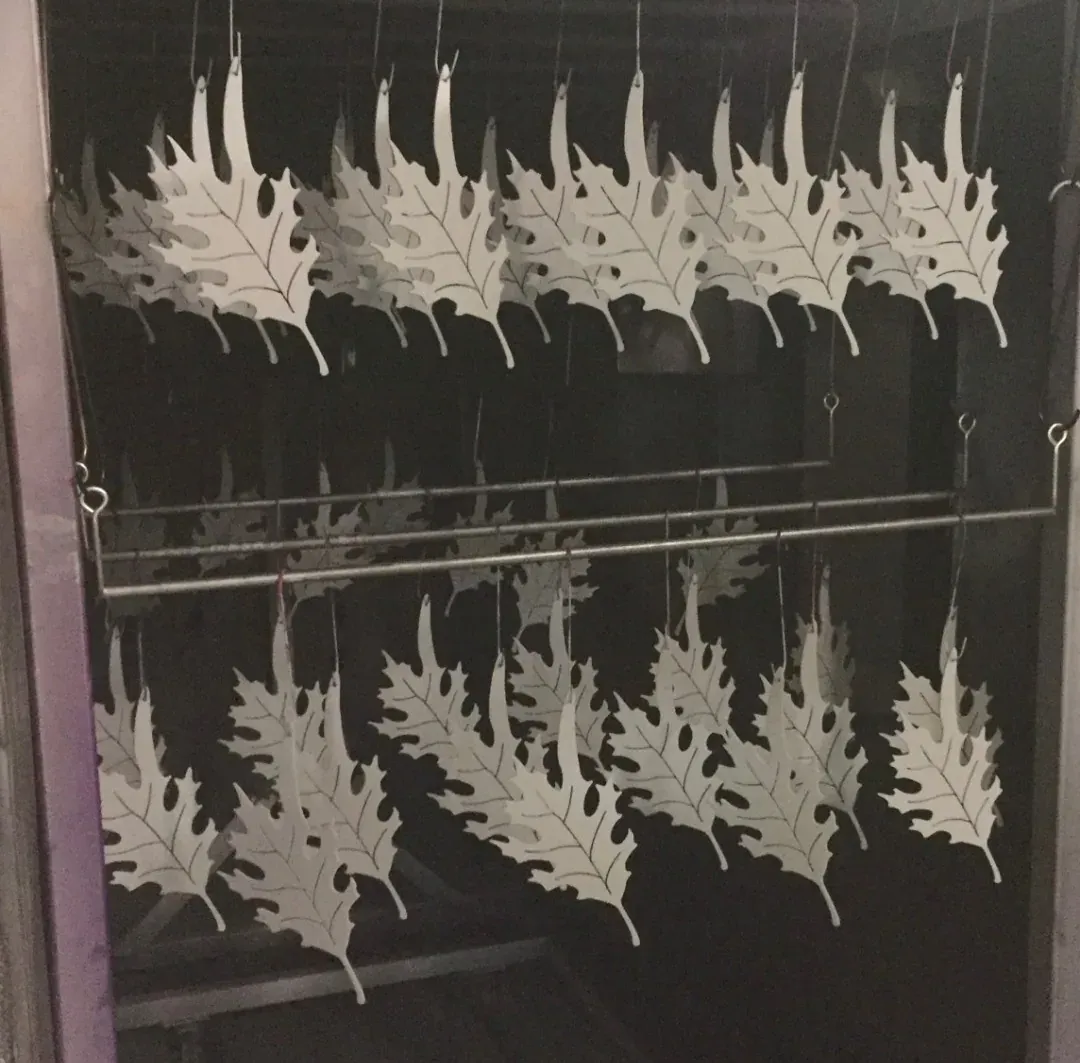
Yes. Single parts are welcome, not just batches. A one-off bracket runs alongside production batches on the same racks, and goes through the same blast, prep, coat, and cure process either way.
Where are you located and what areas do you serve?
The shop is in Hackettstown, NJ, close to the point where Warren, Morris, and Sussex counties meet — an easy drive from Dover, Randolph, Newton, Sparta, Washington, and the rest of the tri-county area. Call (973) 713-3401 to arrange your parts drop-off.