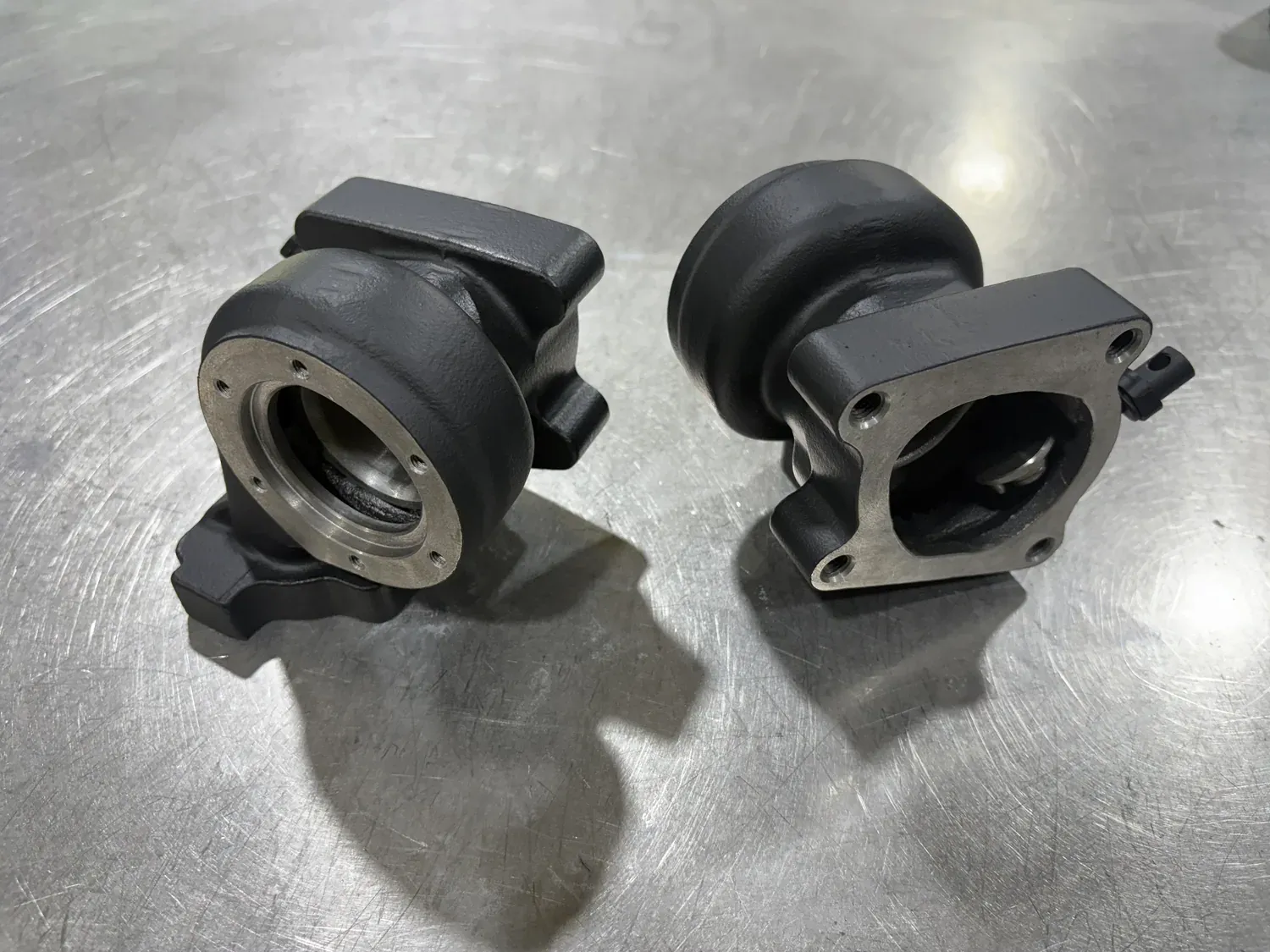
A thermal barrier coating reduces how much heat a part radiates into the space around it. Applied to exhaust components, turbo housings, heat shields and engine bay hardware, it keeps more heat inside the part and less of it in the wiring, hoses and plastics packed nearby. Unlimited Powder Coating in Hackettstown, New Jersey applies thermal coatings alongside high-temp ceramic work on the same parts and in the same shop.
Heat is a neighbour problem
Most heat complaints in an engine bay are not about the hot part at all. They are about what sits next to it: a wiring loom, a brake line, a plastic reservoir, a sensor. The part that runs hot is doing its job. The problem is how much of that heat it radiates outward.
Thermal barrier coatings address that from the receiving end: the intake that is soaking up heat it should not be, the shield that is passing it straight through, the cover or panel that is radiating it back into the bay.
Where this stops and ceramic starts
The exhaust itself — manifolds, downpipes, collectors, turbo housings — is high-temp ceramic work, because those parts have to survive their own temperature before anything else matters. Thermal work starts one step out from there, on everything the exhaust is heating up. Plenty of jobs involve both, on different parts, in the same visit.
Tell us the vehicle, not just the part
The useful information is what the part came off, where it sits and what is next to it. An intake two inches from a downpipe is a different problem than the same intake in an open bay. Parts arrive carbonised and oily and get blasted clean before anything is sprayed, exactly as with every other coating here.
What is the difference between this and high-temp ceramic coating?
High-temp ceramic is about a part surviving the temperature it reaches, so it goes on the exhaust itself: manifolds, downpipes, turbo housings. A thermal barrier is about where that heat ends up, so it goes on what surrounds the exhaust: intakes, shields, covers and the panels of a crowded bay. Some jobs want both, on different parts.
Will a thermal coating make a measurable difference?
It depends on the part, the coating and how tightly the bay is packed. A thermal barrier reduces radiated heat rather than eliminating it, and the benefit is largest where a hot part sits close to something that does not like heat. Anyone quoting a precise temperature drop without seeing your setup is guessing.
Can you coat intake parts to keep them cool?
Coating an intake manifold or charge pipe helps keep absorbed underhood heat out of the air going into the engine, which is the usual reason people ask. It is not a substitute for good routing or an adequate intercooler, but on a crowded bay where an intake runs close to an exhaust it is a sensible addition.