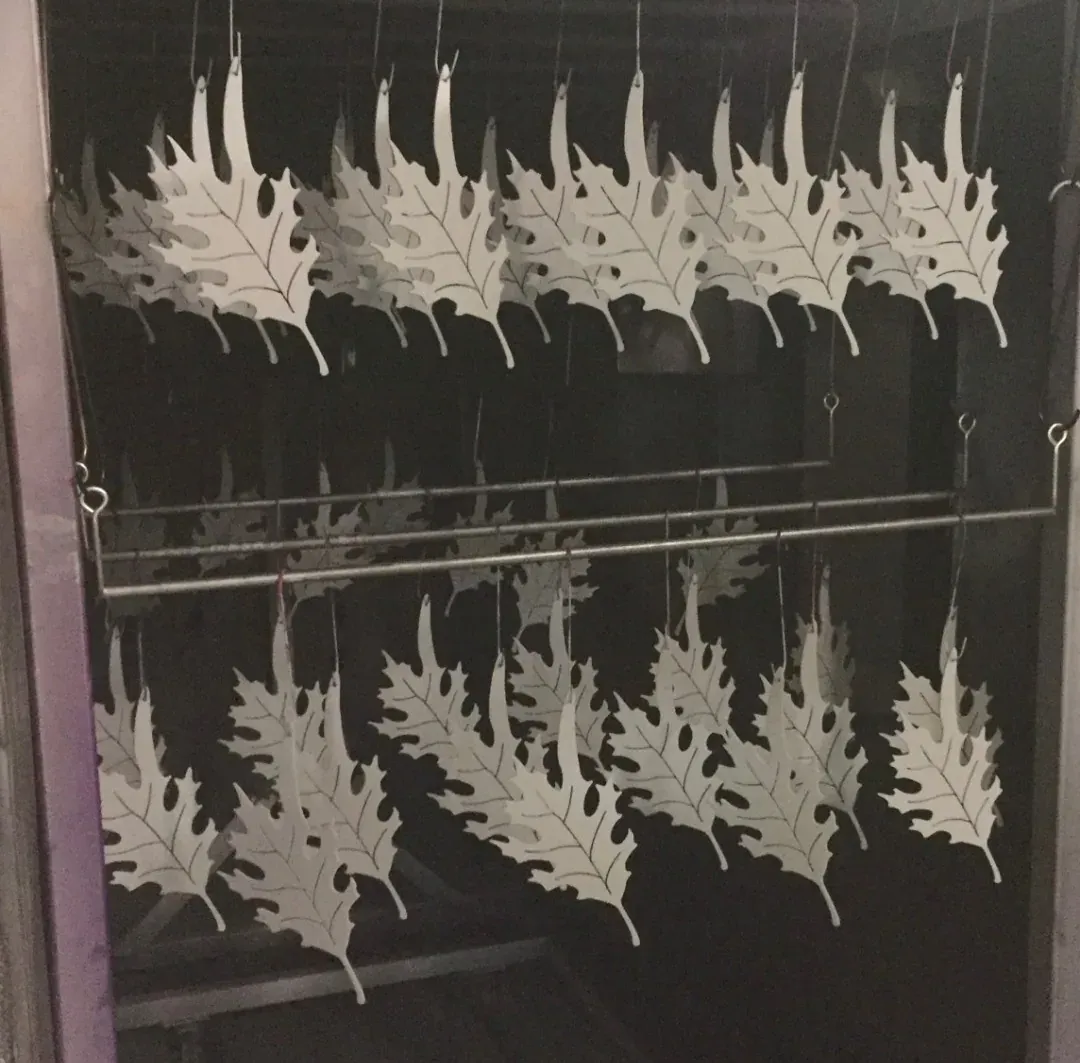
Laser cutting uses a focused beam to cut a profile out of flat metal, following a digital file, with a narrow kerf and no tooling to make first. Unlimited Powder Coating in Hackettstown, New Jersey cuts sheet metal and steel to a customer's DXF, CAD file or dimensioned drawing — brackets and mounting plates, enclosure panels carrying dozens of holes and slots, and decorative work with fine interior detail — then welds and powder coats the result in the same building.
From a file to a finished part
Cutting is the first step, not the deliverable. Most parts that come off the laser here get
welded, blasted and powder coated before anyone
collects them — which means one drop-off, one pick-up and one shop accountable for whether the holes
line up.
Send a DXF, a CAD file, a dimensioned sketch or the part you are replacing, along with the material,
the thickness and the quantity. If the part gets bent afterwards, say so up front — it has to be
drawn as a flat pattern with the bend allowance already in it, and that cannot be added once the
profile is cut.
What the laser is actually good for
Plain profiles — brackets, plates, shims, gussets — where the value is a clean edge and no tooling to
make first. A single part costs what a single part costs, with no minimum order to justify a die.
Hole patterns. Enclosure panels, equipment covers and mounting plates carrying dozens of holes,
slots and keyholes that all have to land where the drawing says. This is where laser accuracy earns
its keep, and where a plasma cut or a drill press tends to cost you time at assembly instead.
Fine interior detail. Decorative and signage work with cuts inside the profile — the veining inside
a cut steel leaf, for instance. Thin webs and tight radii that most shop processes will not hold.
Materials and limits
Steel, stainless and aluminum in sheet and plate. Copper is difficult because of how reflective it
is, some materials release fumes that make them unsafe to cut at all, and past a certain thickness a
sheet laser stops being the right tool — where that line falls depends on the material and the
finish you need.
Rather than guess from a spec sheet, describe the part and what it has to do. You will get a yes, a
no, or a better way to make it.
Cutting for people who are not fabricators
Plenty of the work here starts as “I need one of these and nobody will make just one.” A broken
bracket, a replacement panel, a mount that never existed. Bring the old part, or a sketch with real
dimensions on it, and it can be drawn up and cut.
For the full cut, weld and finish sequence, see metal fabrication.
What is laser cutting good for?
Three jobs in particular. Cutting a one-off profile with no tooling to make first, so a single bracket costs what a single bracket costs. Holding a hole pattern accurately enough that a panel with thirty holes lines up with what it bolts to. And holding fine interior detail — thin webs, tight radii, cuts inside the profile — where a plasma torch or a drill press would struggle. If a part is a plain rectangle out of heavy plate, a laser is not the cheapest way to get it.
How much does it cost to get something laser cut?
There is no flat rate for laser cutting. Cost is driven by the material and its thickness, how much cutting the profile actually needs, and how many you want. A part with a long perimeter and forty holes takes far more beam time than a plain rectangle of the same size, and the second identical part is much cheaper than the first because the file is already set. Send the file or a sketch with the material, thickness and quantity and you will get a real number rather than a range.
What file do you need?
DXF is the working format for cutting. A CAD file, a dimensioned sketch or the old part will all get there too, they just take a step to convert. Draw the part at actual size in real units, keep it to closed profiles, and say whether the part gets bent afterwards — a part that will be bent has to be drawn as a flat pattern with the bend allowance already in it, because once the profile is cut that dimension is fixed.
What will a laser not cut?
This shop cuts metal, so wood, acrylic, glass and composites are a no. Within metal, copper is genuinely difficult because of how reflective it is, some materials release fumes that make them unsafe to cut at all, and heavy plate is past the point where a sheet laser is the right tool. Say what you have in mind and what thickness, and you will get a yes or a no rather than a maybe that wastes a week.
Which is better, laser cutting or plasma cutting?
For sheet and thin plate a laser gives a cleaner edge, a narrower kerf and far more accurate small features, which is why holes and fine detail come off it. Plasma is faster and cheaper on thick plate where edge quality matters less. If the part is a heavy bracket out of half-inch steel that gets welded and coated, the difference will not show; if it is a panel with thirty holes that has to line up with something, it will.
Can you cut and finish in one job?
That is the point of cutting here rather than at a laser house. A part gets cut, welded and powder coated in one building, so it arrives as the finished thing rather than as blanks you then have to get somewhere else. See metal fabrication for how the whole sequence runs.