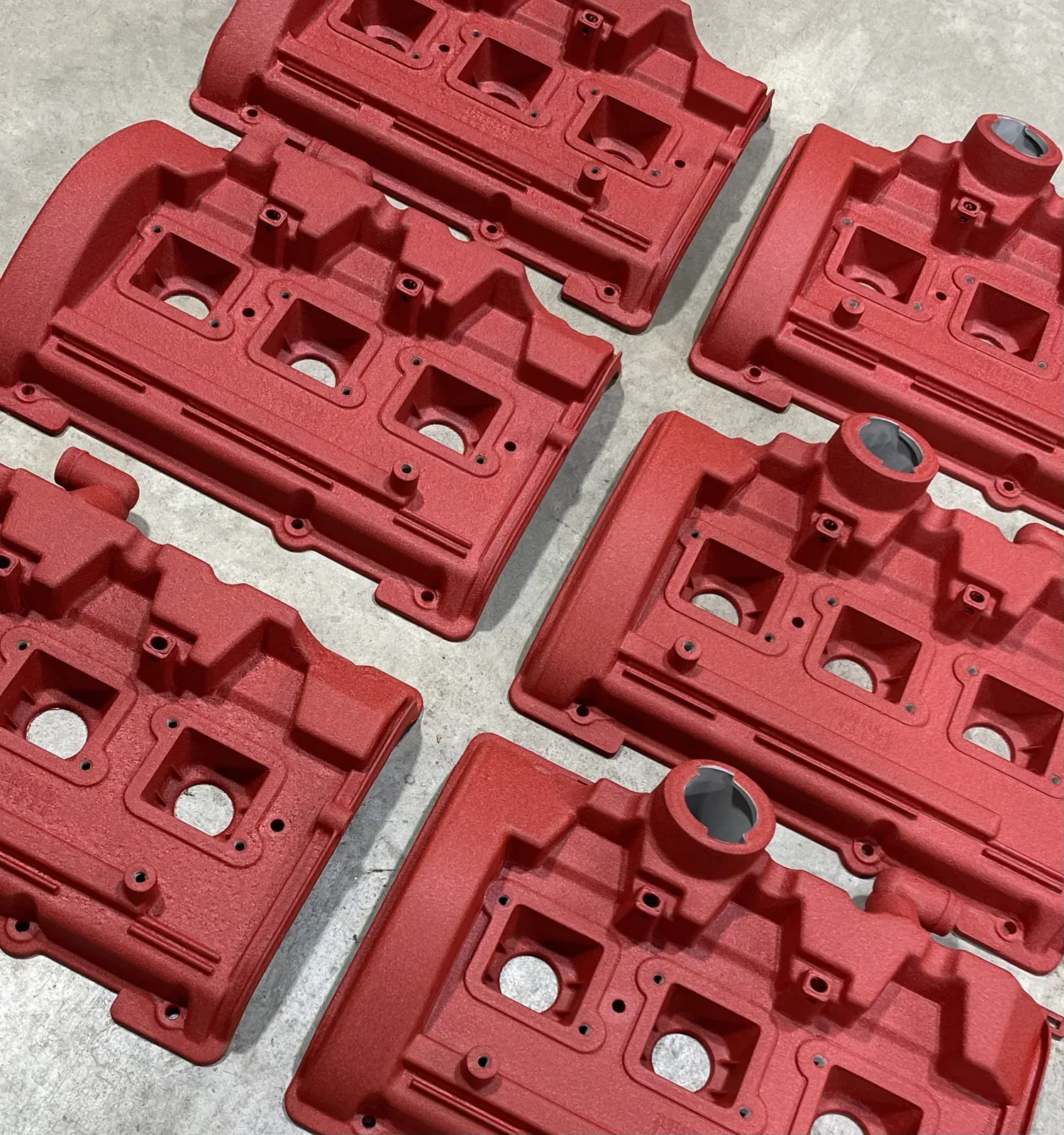
Powder coating is a dry finishing process: pigment in powder form is electrostatically charged, sprayed onto grounded metal, then cured in an oven at around 400°F where it flows out and bonds into a hard shell. The owner has over 20 years of coating experience and has run Unlimited Powder Coating in Hackettstown, New Jersey for 15 years, on everything from a single bracket to production batches, for customers across Morris, Sussex and Warren counties.
What the process actually involves
The sequence is strip, blast, prep, coat, cure — how much of each depends on the part. A bare fabricated bracket needs almost no stripping; a gate under forty years of paint needs a lot. Chemical stripping dissolves old paint, powder and undercoating, and reaches seams and threads that abrasive cannot. Media blasting cuts rust and mill scale back to bright metal. Then the part is degreased, masked and hung, sprayed with electrostatically charged powder, and baked until the powder flows out and bonds.
The prep is where the durability comes from. Powder sprayed over contamination looks identical on collection day and fails within a season. Powder sprayed over properly blasted steel is a thick, hard film that resists chips, fuel, brake dust and UV far better than the same part in paint.
Choosing a finish
Gloss, satin, matte and textured finishes all behave differently in service, and so do the specialty families. Candies and metallics need a base coat and a clear, which means more oven time. Clear top coats protect a polished or candy layer underneath. On steel that will live outdoors or near road salt, a zinc-rich primer underneath is usually worth it — which system suits a given part depends on what it is made of and what it is up against.
Wheels are their own conversation, because they take brake heat, road salt and aggressive cleaners that most parts never see — see wheel and rim powder coating for how a set is stripped and refinished.
If the color has to match something you already own, custom color matching is a core service here rather than an afterthought. Bring a sample, a swatch or a manufacturer code.
Single parts and production runs
A one-off bracket is welcome, and so is a pallet. Work here has included jobs tied to military and NFL projects, and the shop partners with machine shops on parts headed into government contract work. Production batches, recorded processes and spec-driven protective work are a different job with different priorities — that is industrial powder coating.
Can you powder coat over rust?
No. Rust keeps spreading under a coating, so it has to come off first — blasted back to sound metal, or chemically stripped where it has crept into seams. Once the steel is clean it can be coated, and on a part heading back outdoors a zinc-rich primer underneath is usually the right call. If a part turns out to be rusted through rather than rusted on, you get told before money is spent.
Can you powder coat over paint?
Not on work that leaves this shop. Powder bonds to the surface it is sprayed on, so over paint it is only ever as well attached as the paint underneath — and old paint on a used part is rarely as sound as it looks. It lifts in sheets, usually taking the paint with it. Old paint, old powder and undercoating come off first here. That stripping is why prep is most of the labor on a typical job and most of what you are actually paying for.
Is powder coating cheaper than painting?
Per job, powder is usually more than a rattle-can respray and comparable to a decent liquid paint job, because the prep is more thorough and the equipment is more involved. Over a service life it generally works out cheaper, because a properly prepped powder film is thicker and harder than most liquid finishes and takes chips, fuel, brake dust, cleaners and UV better. How much better depends on the prep, the powder and where the part lives — a good liquid system on a garage-kept part can outlast a bad powder job outdoors.
How long does powder coating last?
That depends far more on prep and exposure than on the powder. A properly stripped, blasted and primed part living indoors can stay looking new for many years; the same powder sprayed over contamination can fail in one season, and a bright color in constant direct sun will fade sooner than a black texture in a garage. Where a part lives is the single most useful thing you can tell us.
What are the downsides of powder coating?
Everything that cannot take 400°F has to come off the part first, so there is disassembly. It is not a spot repair — a damaged area means recoating the piece rather than touching it in. And it is a shop process, not a driveway one, so the part has to come to the shop. People put up with all three because the finish lasts.
How long does powder coating take?
Turnaround depends on how much prep the parts need and what is already on the racks. Stripping a rusted part back to bare metal takes longer than coating something that arrives clean, and a specialty finish adds oven cycles. Call with photos and you will get a realistic date rather than an optimistic one.
Do parts need to be disassembled first?
Usually, yes. Anything that cannot take 400°F has to come off: bearings, seals, rubber, plastic trim, electronics and adhesives. Threads and machined surfaces stay on but get masked. If you are not sure what has to come apart, send photos before you start pulling it down.
Can you coat over an existing finish?
Not here. Recoating over a sound, compatible existing coating is possible in the trade, but it depends on knowing exactly what is underneath and that it is intact — and on a part that has been in service, you usually do not. Stripping back to bare metal removes that guess, which is why blasting is part of the job here rather than an upsell. It is also the single biggest reason coatings fail elsewhere.