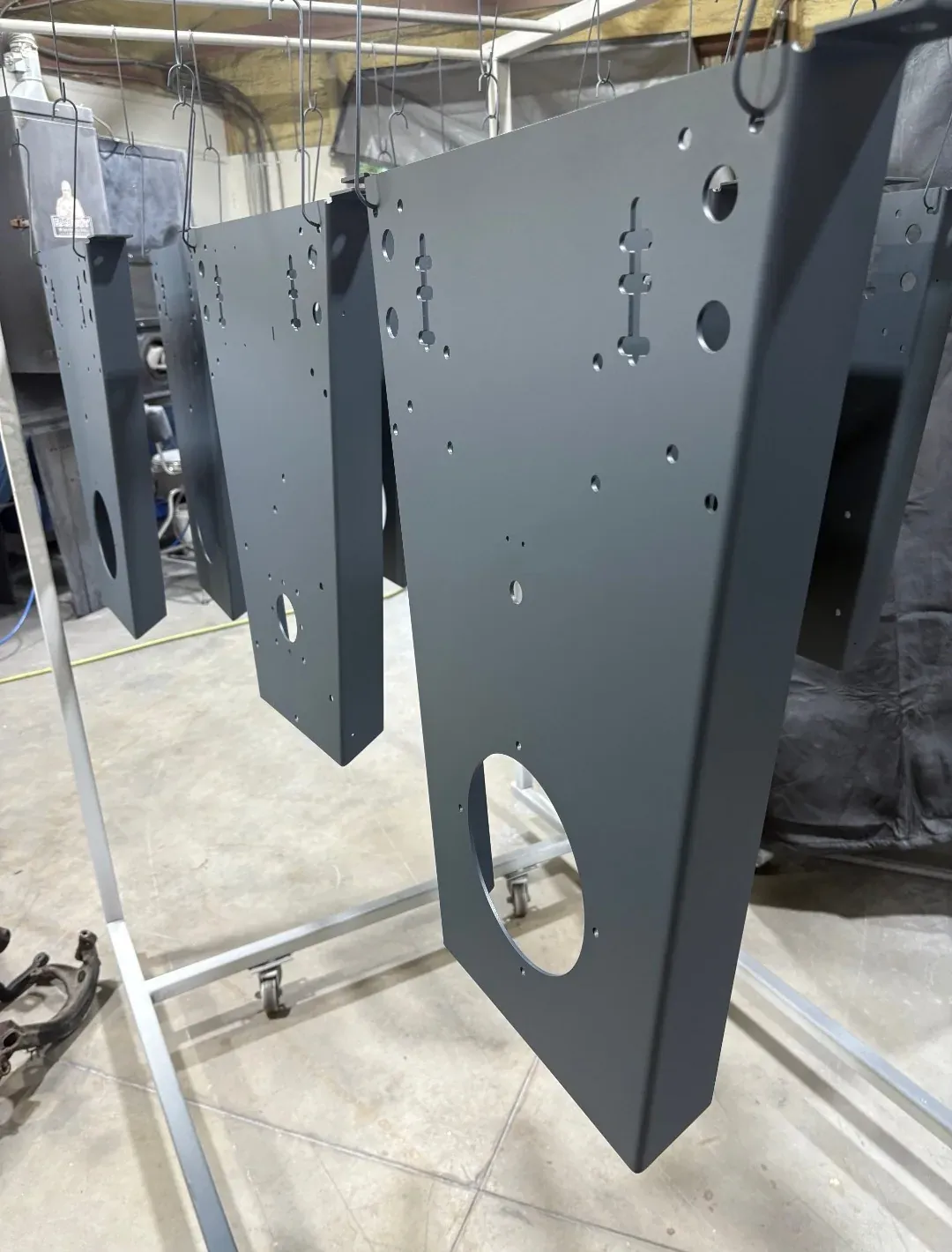
Industrial powder coating covers batch and production work for machine shops, fabricators, manufacturers and contractors: repeat parts, spec-driven protective finishes and larger volumes rather than one-off consumer jobs. Unlimited Powder Coating in Hackettstown, New Jersey has run this work for 15 years, including coating on projects tied to military, NFL and government contract work, and partners with machine shops on parts headed into those jobs. Metal finishing, surface preparation and protective coatings all run through the same shop.
Built around repeat work
The hard part of production coating is not the coating, it is repeatability. A batch that arrives next quarter has to match the one that shipped last quarter, which means the powder, the prep, the masking and the cure schedule all get recorded rather than remembered.
That is also what makes a coater usable as a supplier rather than a vendor of last resort: predictable turnaround and a finish that does not drift between runs.
Surface preparation to a standard, not to a habit
Industrial parts arrive with mill scale, cutting fluid, weld spatter and rust preventative on them, and none of it can stay. Parts are degreased and blasted to a clean, keyed surface, with the media chosen for the substrate rather than for whatever is loaded.
Where corrosion resistance is the point rather than appearance — protective coating rather than decorative — a zinc-rich primer goes on before the color. For parts that see heat, high-temp systems are available in the same shop.
Fabrication and finishing together
Machine shops and fabricators send work here partly because welding and light fabrication happen under the same roof, so a part that needs a tab added or a repair made does not have to travel to a third party and back before it gets coated.
Send the part count, the material, the finish and any spec, and you will get a straight answer on turnaround.
Do you take on repeat production work?
Yes, and it is a large part of what the shop does. Repeat work benefits from recording the exact powder, the masking and the process the first time, so batch fifty comes back looking like batch one. That record is the difference between a coater and a supplier.
Can you meet a coating specification?
Send the spec before the parts. What matters is the substrate, the required prep standard, the coating system and any film thickness or corrosion requirement. If a spec calls for something outside what this shop does, you will be told that rather than have it attempted, because a finish that fails an inspection costs you more than a declined job.
How do you handle masking on machined surfaces?
Threads, bores, sealing faces and bearing surfaces get masked so they stay to size. Mark up a drawing or the parts themselves with what must stay bare, because film thickness is real and a coated bore is a scrapped part. On repeat work the masking plan is recorded with everything else.