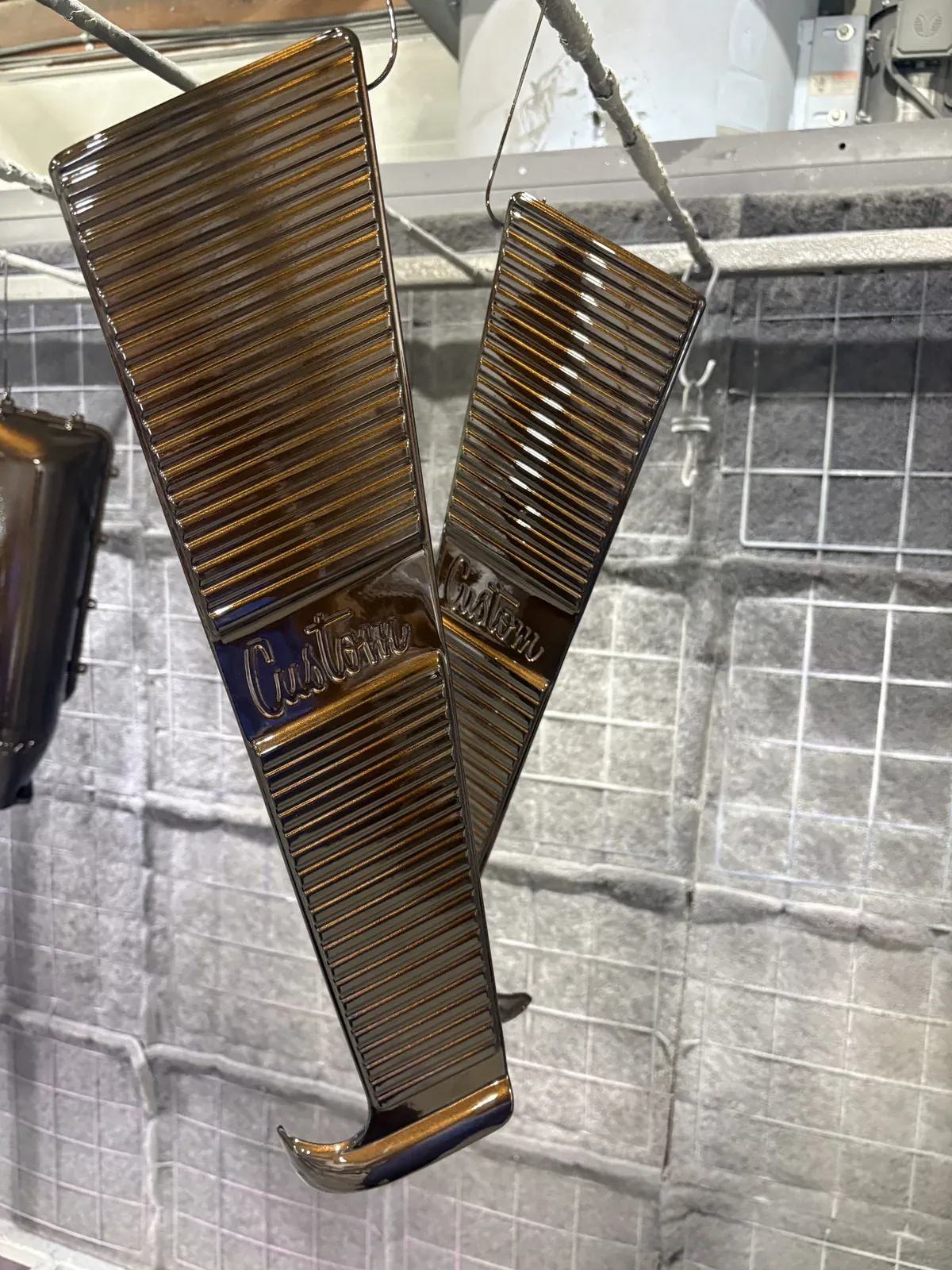
Specialty powder coating finishes are multi-stage systems: a base coat is applied and cured, then a translucent candy or effect layer, then usually a clear on top. The result has visual depth that a single-stage color cannot produce. Unlimited Powder Coating in Hackettstown, New Jersey applies candies, metallics, chrome-look, pearls, textures, wrinkles and fluorescents from the Prismatic Powders and Columbia Coatings catalogs.
A candy is a translucent color layer sprayed over a reflective base, most often a silver or gold metallic. Light passes through the candy, bounces off the base and comes back, which is where the depth comes from. That also means the base is not optional and cannot be skipped: candy over the wrong base is simply a different color.
Metallics and pearls carry the effect in the powder itself, so they are a single color pass, but they still earn a clear coat on anything that will see sun, weather or regular cleaning.
Textures, wrinkles and hammertones
Textured finishes solve a practical problem as well as an aesthetic one: they hide surface imperfections that a gloss finish would magnify. On older cast parts, weathered steel and anything with pitting that will not fully blast out, a texture or a wrinkle is often the finish that makes the part look right rather than merely coated.
They are also among the toughest finishes available, which is why they show up so often on tool boxes, racking, equipment housings and roll bars.
Getting the effect you actually pictured
Specialty finishes are the area where expectation and result drift apart most, usually because a color was chosen from a phone screen. Look at the real product photography in the color section, pick two or three candidates rather than one, and say what the part is and where it will live. On a wheel set or a frame, that conversation is worth having before the powder is ordered rather than after.
Why do candy and metallic finishes cost more?
Because they are not one coat. A candy is a translucent layer that only reads correctly over a specific base, so the part goes through the booth and the oven at least twice and usually three times with a clear on top. The powder itself is often a specialty product rather than a stock color, but the extra oven time and handling is most of the difference.
Will a chrome-look powder actually look like chrome?
It looks like a very bright mirror-effect finish, and on the right part it is genuinely striking, but it is not electroplated chrome and up close it does not pretend to be. Chrome-look powders also want careful handling and a clear over them. If you are expecting plating, plating is the honest answer.
Do specialty finishes hold up outside?
It depends which one. Textures and wrinkles are extremely durable and hide surface imperfections well. Candies and brights are more sensitive to UV over years of direct sun, which is why they get a clear top coat. Tell us where the part lives and the recommendation changes accordingly.